.svg)
Why Tennis Australia Embraces All Racket Sports
From padel to pickleball to POP, the Australian governing body sees big value in building the entire category
The choice for tennis organizations always seemed straightforward. Focus on growing the sport and try to maintain the upper hand over emerging racket sports.
But Tennis Australia is taking a different approach.
Rather than resisting the rise of new racket sports, the organization is leaning into it.
“We want as many rackets and paddles in hands as possible,” said Callum Beale, Head of Game Expansion at Tennis Australia.
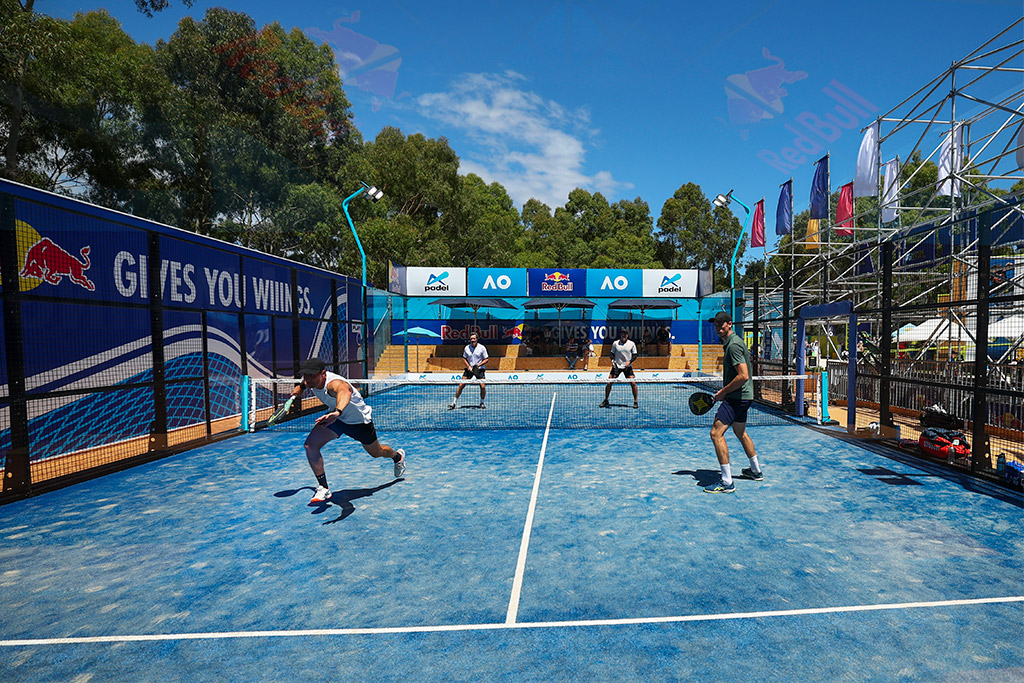
That mindset is at the core of Tennis Australia’s “game expansion” strategy, a model that embraces pickleball, padel, POP, and other emerging formats as tools to grow overall participation in racket sports.

Different Sports, Different Players
One of the key insights behind this strategy is that these sports are not pulling from the same audience.
Instead, they are bringing new people into racket sports.
- Pickleball is often attracting first-time players and beginners
- Padel is drawing in fitness-focused participants willing to pay a premium experience
- Tennis remains the foundational sport with the broadest base
“There’s not an enormous amount of instances where someone has stopped playing tennis to play an alternative,” Beale explained.
In many cases, players are entering the category through one sport and then exploring others over time.
And a new way to get people into tennis is to welcome them into the racket sports ecosystem. Give them the opportunity to choose the sport that best fits their preference and lifestyle, then invite them to try tennis as well.
The Rise of the Racket Club
As participation expands across multiple disciplines, a new facility model is beginning to take shape in Australia and across the world.
Instead of single-sport venues, clubs are evolving into multi-sport environments that include tennis, pickleball, and padel in one location.
These clubs are designed to attract a broader audience, increase utilization of facilities, and create more sustainable business models.
According to Tennis Australia, when executed correctly, this model can drive significantly more engagement than a single-sport approach.
Building the Infrastructure for Growth
While showcasing events has been an early focus, Tennis Australia is now shifting toward long-term infrastructure.
From junior pathways and grassroots development to digital platforms to unify fragmented booking and player experiences, these steps will help develop the racket sports ecosystem to provide long-term success for racket sports in Australia.
Providing this infrastructure will unlock greater accessibility for the different demographic groups looking to adopt a new racket sport.
Why Australia Is a Unique Case Study
Australia presents a unique testing ground for this strategy.
Unlike other regions, padel and pickleball have entered the country at the same time and are both seeing similar growth.
This also means no organization is yet to become the leader of growing the sport.
Tennis Australia is seizing the opportunity to lead this growth and become the go-to resource in the country for padel, POP, and pickleball.
Can other organizations embrace the same approach? It’s possible, but it would be more challenging. However, it could be worth a try as the current approach of competing against other sports hasn’t been truly successful in stopping players from adopting them.
Tennis courts are disappearing, clubs are pivoting to other sports, and players are leaving to play new racket sports.
It might be time to follow Tennis Australia’s lead and see how promoting all racket sports can create a net positive that brings in more players, revenue, and global tennis interest.