.svg)
Racketlon: The Ultimate Showdown for Racket Sports Athletes
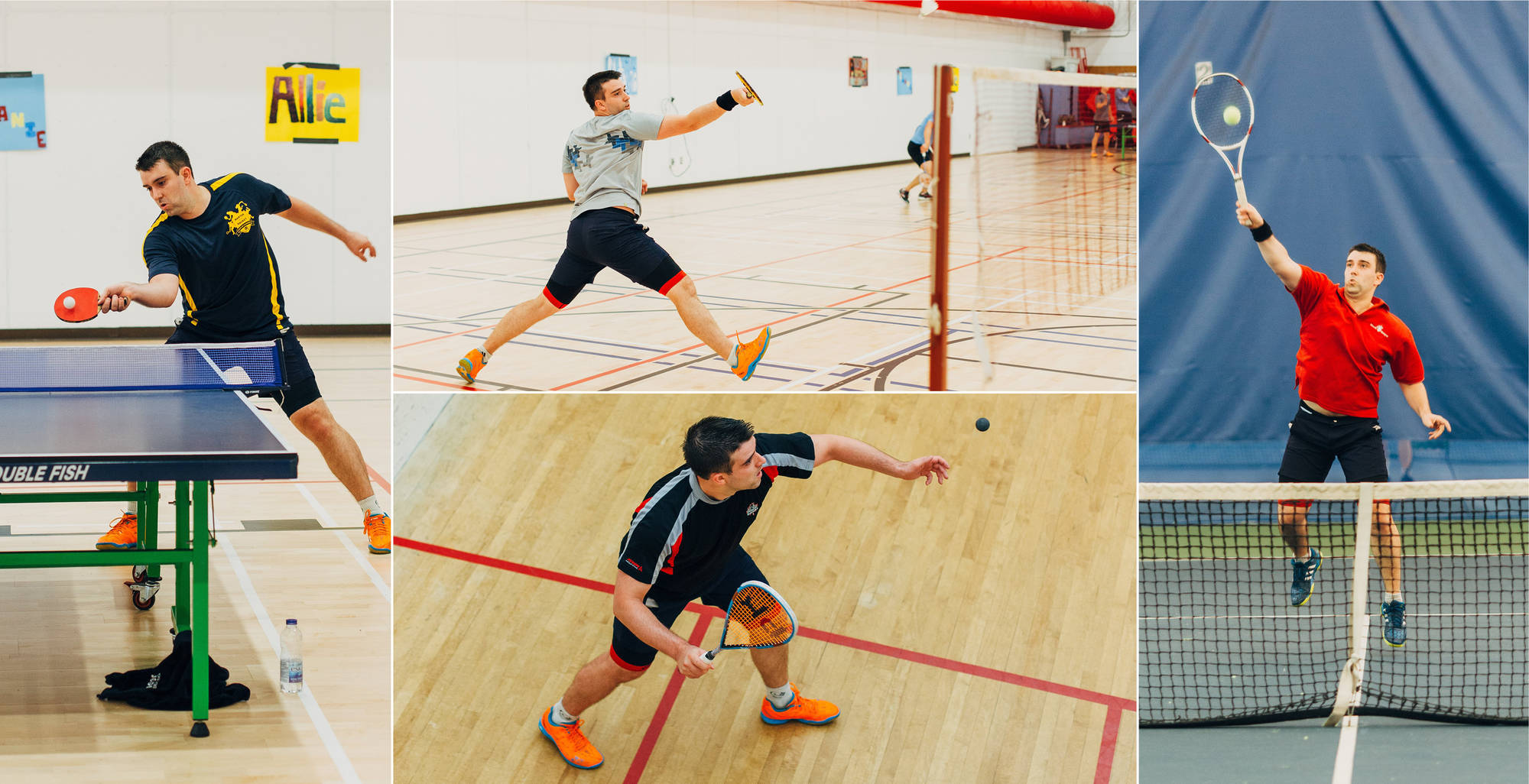
The unique multisport competition unites table tennis, badminton, squash, and tennis in a racket sports quadratholon gaining global traction
For most athletes, perfecting one racket sport at a high level is hard enough. But thousands of Racketlon competitors across the world take it to another level as they look to master four.
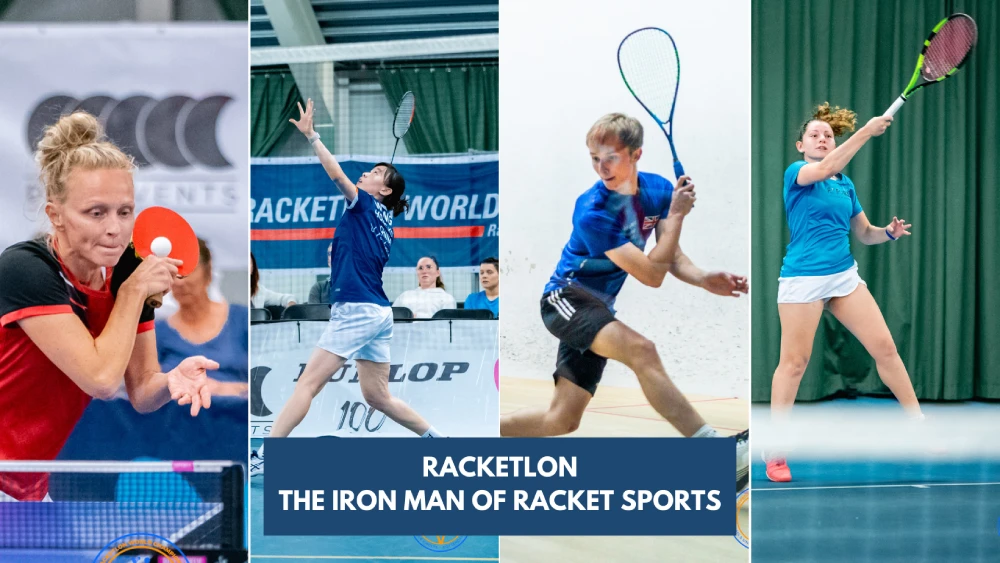
The fast-growing international sport combines table tennis, badminton, squash, and tennis into a single match format that tests versatility, strategy, and mental toughness across multiple disciplines. While still relatively unknown in the United States, the sport has developed a passionate global community and a dedicated circuit of international tournaments.
On the surface, Racketlon is relatively basic. Players compete in all four sports in a row with each sport played to 21 points. The player who scores the most points across all four sports wins the match. However, the execution is the hard part.
“It’s one of the hardest sports in the world because there are four sports, but people say there is a fifth sport and that is the mental challenge,” said Patrick Moran, USA Racketlon President. “You have to adjust your attitude or mentality with every single sport depending on your opponent.”
A Mental and Physical Challenge
Part of what makes Racketlon truly unique is the challenge of transitioning seamlessly from one sport to the next. With different grips, balls, and overall feel, there is no room to adjust because slow starts will give your opponents a crucial edge on the overall match.
“In tennis you might be up 40-love and relax,” Moran said. “But in Racketlon every point is crucial because it affects the overall result.”
From sport to sport, players must constantly adjust their strategy depending on the current score, their opponent’s strengths, and their own talent level with each sport.
For example, a player who dominates table tennis might play aggressively to build a strong lead before transitioning to tennis or squash, where their opponent may be stronger.
The unique mental and physical challenges are what attract players to the sport. Rather than focusing on one discipline, they have to master multiple and deploy a strategic mindset and physical skillset unlike any other competition in the world.
A Global Community
While the sport originated in Northern Europe, it now has tournaments and players across dozens of countries throughout the world.
From India to Hong Kong, Racketlon communities have developed competitive scenes and regularly host international tournaments.
At the top level, the Racketlon World Tour and World Championship bring the sport together with players from around the world traveling internationally to compete.
The atmosphere at these tournaments is less cutthroat than most professional sports environments. There’s a level of mutual respect for all players and that creates a collaborative and welcoming culture.
“Everyone’s really chill and friendly,” Moran said. “After matches people are usually having beers together and just hanging out.”
That sense of camaraderie is a major reason players continue to return to tournaments year after year.
Growing the Sport in the United States
Despite its international presence, Racketlon remains relatively niche in the U.S.
Much of the growth has come through grassroots efforts from players like Moran, who have spent the last several years helping organize tournaments and training players.
But while the sport is still small, it is growing in popularity. There is a dedicated group of players who regularly train in New York City and invite fellow racket sports athletes to join in on the fun.
“We’ve got former collegiate champions and ex-pros in different sports,” Moran said. “Sometimes they kick my butt in their sport and I help them in another.”
Still, building infrastructure for a sport that requires four different court types can be challenging.
Access to facilities, travel to international tournaments, and limited awareness are some of the main barriers slowing the sport’s growth in the U.S.
The Opportunity Ahead
For Racketlon to expand further, players and organizers believe the next step is increasing awareness.
Social media, celebrity participation, and crossover athletes from other racket sports could help introduce the format to new audiences.
“I think the easiest way nowadays is social media,” Moran said. “If athletes with big followings try it and post about it, that could really boost awareness and participation.”
The concept also aligns with a broader trend happening across the racket sports industry. The creation of multi-sport venues that host several racket sports under one roof.
As more facilities begin offering tennis, badminton, pickleball, padel, squash, and table tennis in the same location, the idea of competing across multiple sports may become more accessible.
For Racketlon players, that future would represent the ideal environment.
“If we had venues with multiple racket sports in one place, it would make things much easier,” Moran said.
Until then, the sport continues to grow through the passion of its global community. One rally, one match, and one tournament at a time.