.svg)
The Company Quietly Powering Racket Sports Organizations
Federations, tours, and clubs can now build their own platform to run everything in one place thanks to Tournated
Racket sports are growing fast, but the systems behind them haven’t really kept up.
Most federations, tours, and clubs are still operating on a mix of spreadsheets, disconnected tools, and third-party platforms that were never designed to work together. It gets the job done, but it’s not exactly built for scale.
That gap is starting to matter more as sports like pickleball and padel continue to expand globally.
That’s where Tournated comes in.
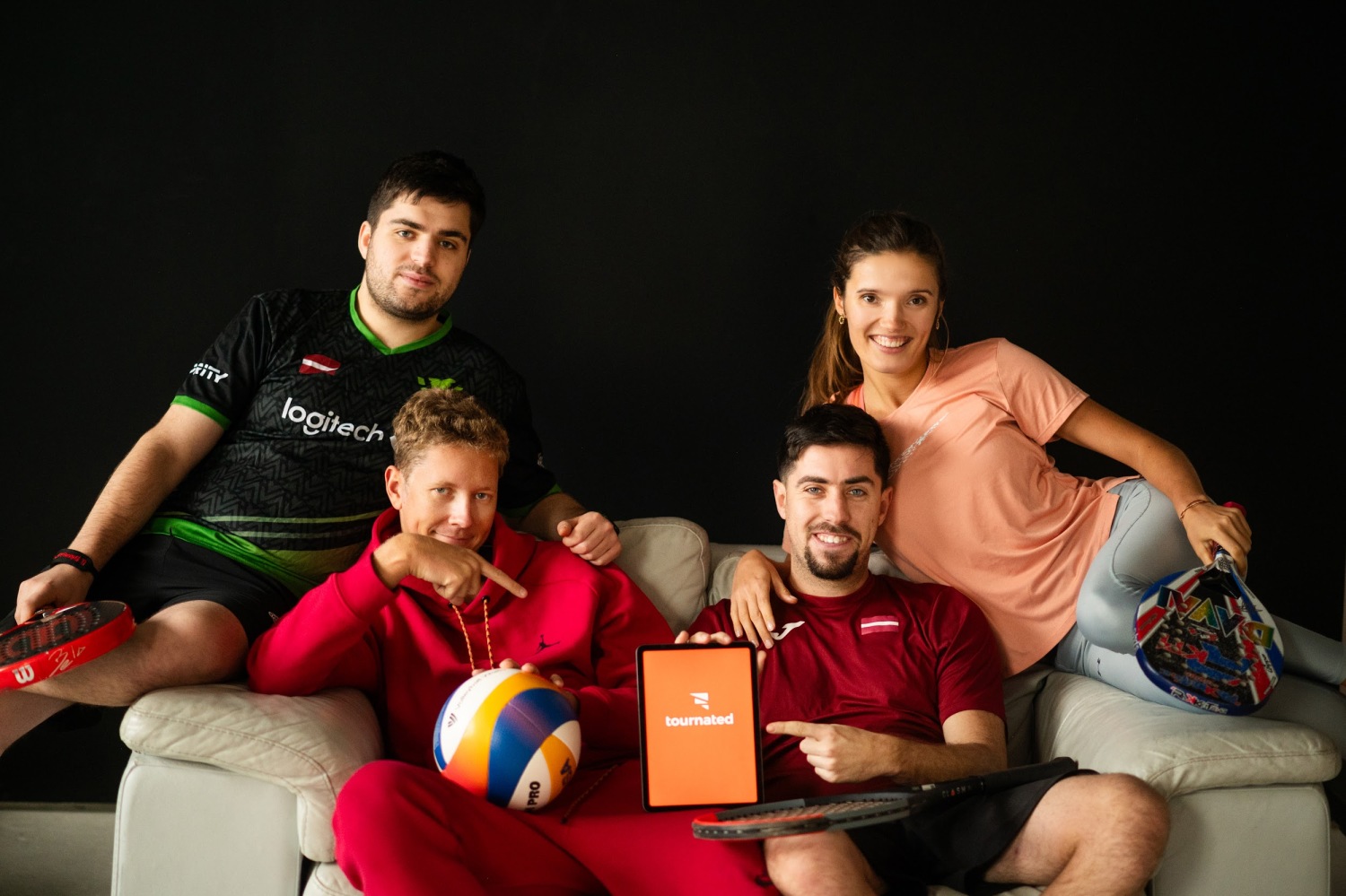
The company, founded by former professional athlete Nikita Ribakovs, is building a platform that allows sports organizations to run everything in one place all under their own brand. It’s not the flashiest part of the industry, but it solves a problem that almost everyone operating in it has run into at some point.
For a long time, sports organizations haven’t really owned their full ecosystem. Data lives in different places, revenue gets split across multiple platforms, and the overall experience feels fragmented. That’s been the norm, especially in more established sports like tennis, where systems have been layered on top of each other over time.
Tournated is pushing a different approach. Instead of relying on outside platforms, federations can actually control their own infrastructure, not just the events themselves, but everything that surrounds them. That includes how players register, how rankings are tracked, how payments are processed, and how the brand shows up across the experience.
You can already see this playing out most clearly in padel. The company recently launched the official platform for the United States Padel Association - a meaningful signal given how early the sport still is in the U.S. market. Instead of inheriting outdated systems, newer organizations now have the opportunity to build modern, fully integrated infrastructure from day one.
That momentum extends well beyond the U.S. Tournated is already the official federation-level solution across multiple padel markets, including Canada, Croatia, Cyprus, Latvia, Lithuania, and South Korea (since January 2026). Beyond padel, the platform operates across 30+ countries in other racket sports, working with organizations such as the Japan Pickleball Association, the Pro European Pickleball Tour (RTA), the Confederation of African Pickleball, the Senegal Tennis Federation, and the World Beach Tennis Association.
What’s interesting is how differently this plays out depending on the sport.
In pickleball, a lot of the ecosystem is still being built in real time, so infrastructure naturally becomes part of the foundation. In padel, growth is happening quickly enough that federations are starting to think about these systems earlier than you might expect. Tennis presents a completely different challenge. There, the issue isn’t building something new, it’s replacing legacy systems without disrupting everything that already exists.
Same problem at a high level, but very different realities on the ground.
Another piece that stands out is that this isn’t just about federations. The platform is also being used by private operators and entrepreneurs who want to build their own versions of a sports ecosystem, whether that’s running tournaments, organizing events, or creating regional tours. That opens up a different layer of the market and raises a bigger question around who actually controls the structure of a sport moving forward.
It’s easy to focus on participation numbers when talking about growth in racket sports, and those numbers are important. But the next phase of growth is likely going to be shaped by something less visible, and that is how well the underlying systems are actually built.
If players can’t easily find and enter events, if federations don’t control their own data, and if everything continues to live in separate platforms, there’s a ceiling on how far that growth can go.
That’s the layer companies like Tournated are operating in.
It may not be the part of the industry most people pay attention to, but it’s becoming harder to ignore. As racket sports continue to evolve, the organizations that invest in infrastructure early are likely going to have an advantage over the ones that don’t.
And in a category that’s still being shaped in real time, that advantage can add up quickly.